
At the Intersection of Ecology and Medicine: How MSU’s Dr. M. Eric Benbow Advances Global Health

From Buruli ulcer research in West Africa and South America to insect farming in Kenya, his work reflects MSU’s commitment to solving global health problems.

By: Gage Dansby
Doctor Eric Benbow riding in a river boat
MSU researcher and professor Dr. M. Eric Benbow accompanied by fellow researchers on a study in French Guiana.

When Dr. Eric Benbow began his undergraduate studies, he planned to go to medical school. However, a series of transformative experiences changed his trajectory and ultimately shaped a career that now spans continents and disciplines.

“I started as an undergrad wanting to go to med school,” Benbow said. “I had an early interest in medicine, but I took a couple of courses. One was a plant systematics course, and another was limnology, the study of streams and rivers. Then I did a study abroad in the Bahamas, doing coral reef ecology. It occurred to me as I watched this professor take us out into nature… that might be a more interesting career for me.”

That realization led Dr. Benbow away from medicine and toward ecology and entomology. He earned a doctorate studying stream ecosystems in Hawaii before joining Michigan State University as a postdoctoral researcher in 2001. His early work focused on aquatic insects, but a pivotal opportunity introduced him to disease ecology, and to a pathogen that would define much of his career.
A Neglected Disease with Global Impact

While working in the lab of Dr. Rich Merritt, an aquatic entomologist from the MSU College of Agriculture and Natural Resources, Benbow helped secure grants to study Mycobacterium ulcerans, the bacterium that causes Buruli ulcer. The disease, which leads to severe skin ulcers and sometimes amputations, disproportionately affects children in West Africa and older adults in Australia.

“We won some funding from the World Health Organization to go to Ghana, Africa, to do preliminary collections,” Benbow said. “We were able to see the ulcers on children and that changed my life. It really opened my eyes to what privilege really is and what living in incredibly challenging situations is really about.”

Buruli ulcer does not kill quickly, but it maims. In regions where the average annual income is about $200, an amputation can mean the loss of livelihood and the ability to support a family. “If you are disabled in any way, your chances of finding a spouse or having a family are really low,” Benbow said. “That experience changed how I looked at science.”

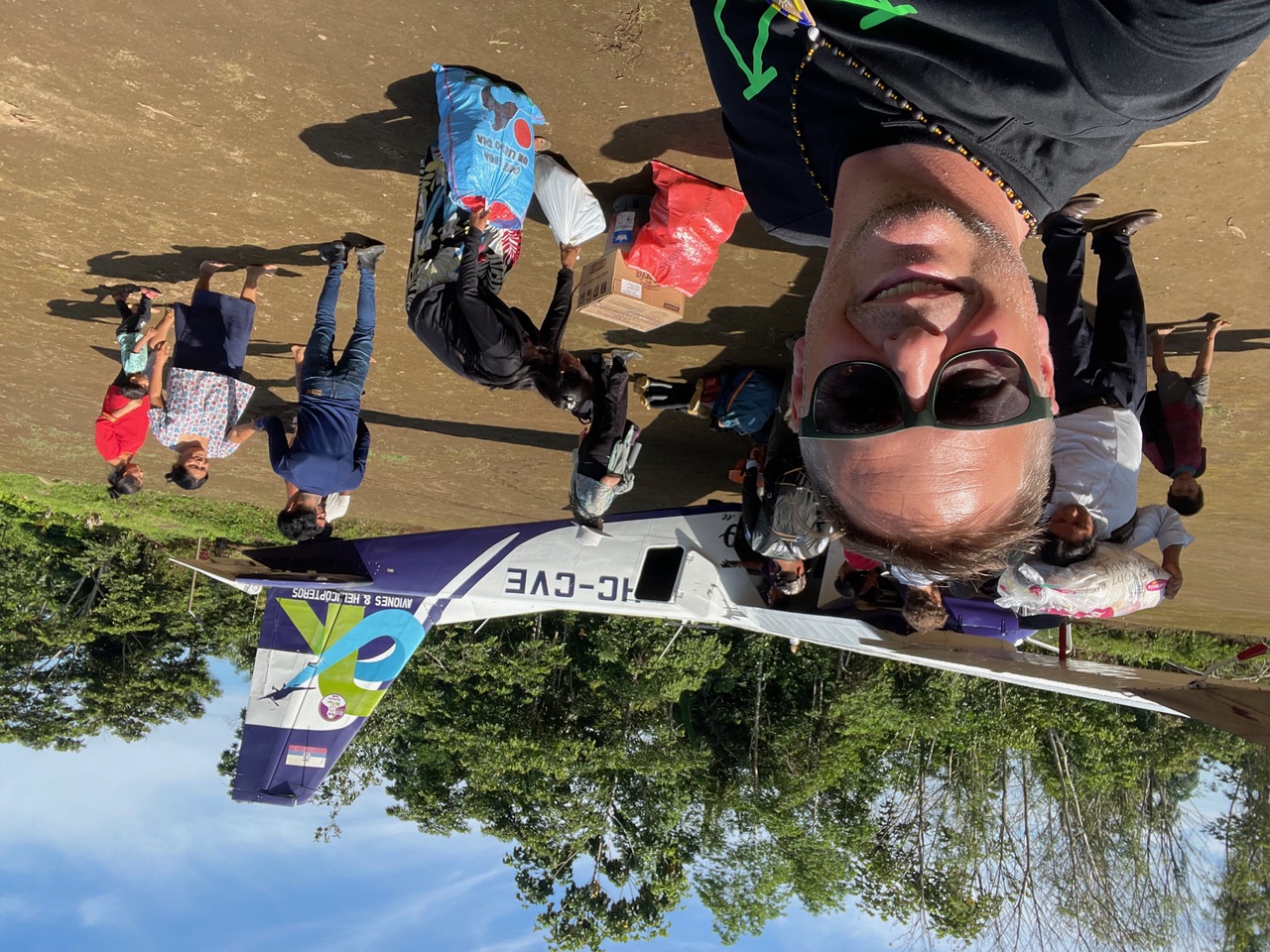
Doctor M. Eric Benbow and a research team preparing supplies for plane travel.
Dr. M. Eric Benbow and a research team delivering supplies for residents in French Guiana.

Benbow has since spent years conducting research in Africa, Australia and South America, investigating how environmental changes, such as deforestation and mining, influence the ecology and transmission of M. ulcerans. His team recently completed a five-year study in French Guiana examining how the pathogen interacts with aquatic ecosystems. The project produced a landmark finding where M. ulcerans was detected for the first time in the United States.

Dr. Benbow and his collaborators are now pursuing National Institutes of Health funding to study the pathogen’s ecology in the southern U.S., focusing on potential carriers such as opossums and transmission pathways involving mosquitoes. “One hypothesis out of Australia is that mosquitoes transmit the pathogen to people, likely from opossums,” Benbow said. “We’re going to test some of that here.”

Expanding the One Health Approach

Benbow’s research exemplifies the concept of One Health, the idea that human, animal and environmental health are interconnected. 

“Our work with Mycobacterium ulcerans has addressed how disturbances to forest ecosystems change biological dynamics so that people can acquire the pathogen,” he said. “If you think about One Health, animal health, environmental health, human health intersecting, that really fits right at the intersection of all three.”

His commitment to One Health also extends beyond disease ecology. Benbow is also advancing sustainable agriculture through insect farming. His work with black soldier flies explores how organic waste can be converted into protein-rich feed for livestock and aquaculture, while producing nutrient-rich fertilizer. 

“Our goal is to make it a continental-scale enterprise of millions of farmers,” Benbow said, noting partnerships in Uganda and Kenya aimed at training small-scale farmers to improve livelihoods and nutritional health.

By reducing feed costs and creating new income streams, these efforts can help address food insecurity and poverty in some of the world’s most vulnerable regions. 

From Forensic Science to Microbiome Research

Benbow’s expertise also extends to forensic entomology and microbiome science. His lab has collaborated with the Wayne County Medical Examiner’s Office in Detroit and European researchers to study postmortem microbiomes, which are microbial communities that change after death. These studies have shown that bacteria can help estimate time of death and even predict whether a person died violently or of natural causes.

“We published a paper in 2018 where not only could we show that the bacteria were different before 48 hours after death and after 48 hours, but we could predict from the bacteria if someone died a violent death or of a natural cause,” Benbow said. The research also revealed links between microbiomes and social determinants of health, such as access to green space and exposure to stress.

Driving MSU's Global Health Mission

Dr. Benbow’s work aligns closely with the work of the Michigan State University Global Health Institute: to support research that addresses complex health challenges worldwide. From combating infectious diseases to promoting sustainable food systems, his efforts demonstrate how interdisciplinary science can improve health outcomes across the globe.

“I look forward to pursuing this in a big way in the next few years because I think it’s going to directly impact a lot of humans in some of the most impoverished areas of the world,” Benbow said.