"The Patients Who Became the Teacher": How Miranda Clinton’s Costa Rica Experience Molded her Path in Medicine

A member of the MSUCOM class of 2028, Clinton reflects on her time, learning experiences and personal impact from her education abroad journey in La Carpio. 

By: Gage Dansby
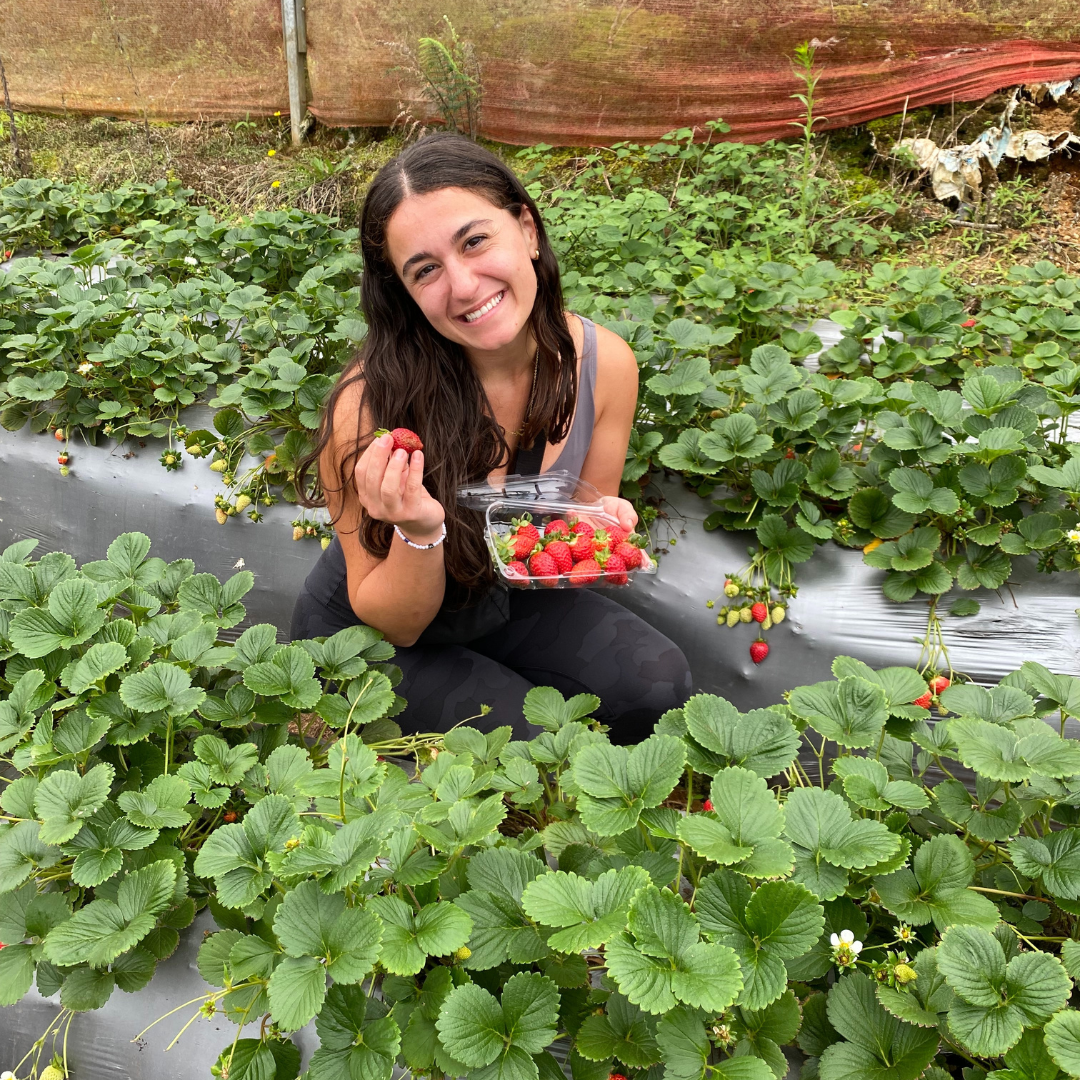
MSU College of Osteopathic Medicine Student Miranda Clinton in a Strawberry patch
MSU College of Osteopathic Medicine student Miranda Clinton in a strawberry patch during her education abroad program in Costa Rica.

Miranda Clinton knew she wanted to be a doctor when she was 4 years old. Unlike most childhood dreams, hers never faded. Through AP science classes in high school, pre-med societies in college and a meticulous application process, Clinton stayed focused on her goal. But it wasn’t until a week in Costa Rica that she discovered what kind of doctor she truly wanted to be.

Clinton, now a student at Michigan State University’s College of Osteopathic Medicine, joined the Global Health Institute’s education abroad program in La Carpio, Costa Rica. The experience, she said, was “life changing.”

“I went on this trip wanting to sharpen my clinical skills and integrate everything I’d learned the past two years,” Clinton said. “What I failed to know until being there is that I think I learned a lot more from them than they learned from me.”
A Lifelong Dream Meets Global Health

Clinton’s journey to MSU began with a clear vision. She applied to medical schools across the country and was accepted to 10, ultimately choosing MSUCOM for its osteopathic philosophy and global health opportunities.

“I really liked the emphasis on patient-first mentality and treating the root cause of a problem,” she said. “Anybody can give somebody medicine, but patients deserve more. They deserve personalized care.”

After her undergraduate study abroad plans were canceled during the COVID-19 pandemic, Clinton promised herself that medical school would include a global experience. The Global Health Institute’s education abroad programs delivered on that promise. When Clinton reviewed the options, including Peru, the Dominican Republic and Costa Rica, she chose Costa Rica for its hands-on clinical work.

“The Costa Rica trip was five days in the clinic,” she said. “The Dominican trip was more textbook work. After two years of didactics, I wanted hands-on experience and to connect with patients.”

She also hoped the experience would help her choose a specialty. It did.

“Actually, when I left that trip, I knew I wanted to do emergency medicine,” Clinton said.

Working in Costa Rica

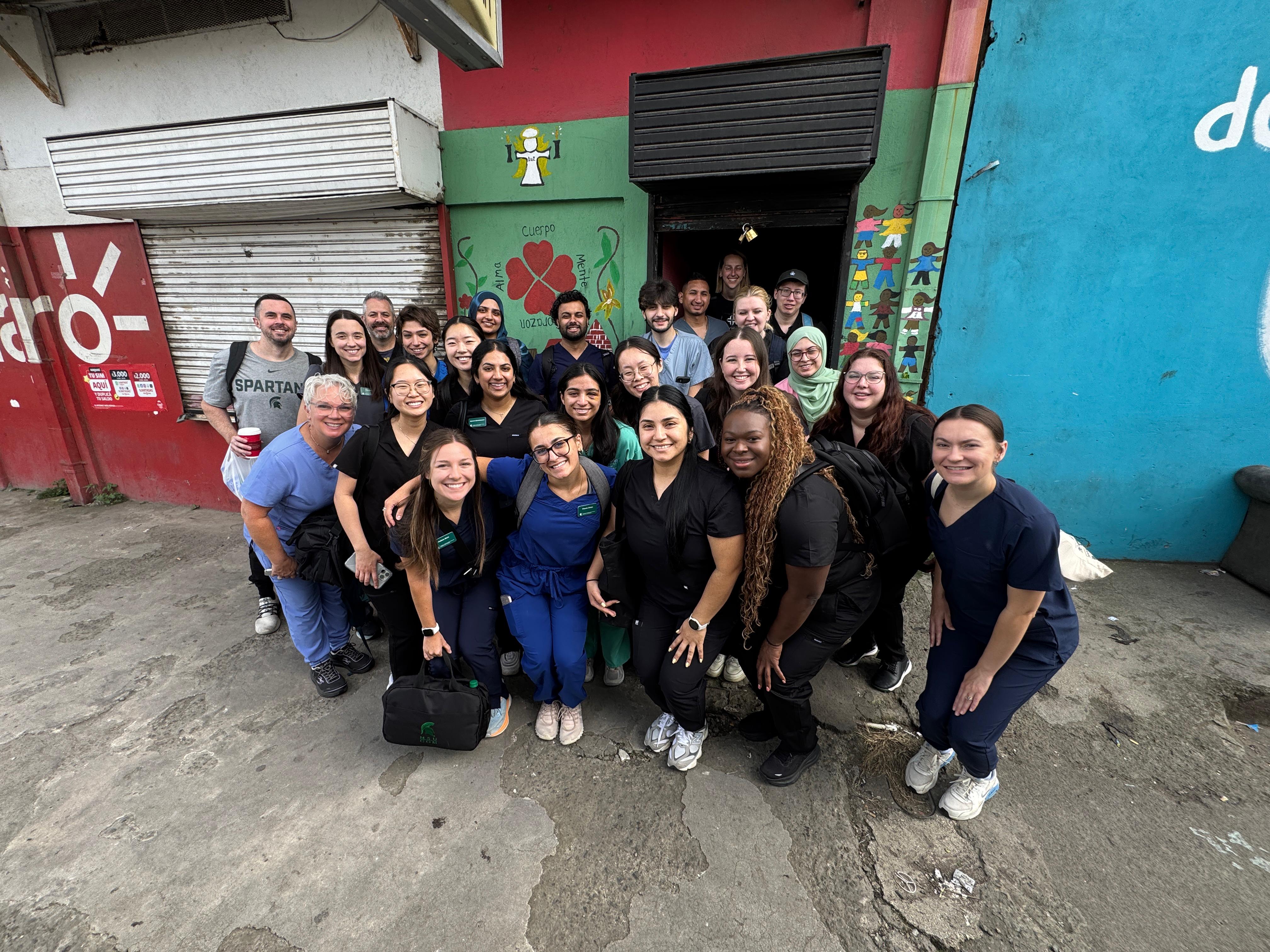
MSUCOM student Miranda Clinton with her medical student cohort on a Costa Rica education abroad trip
Miranda Clinton (center front) with her MSUCOM medical student cohort in Costa Rica.

Clinton, along with fellow MSUCOM students, stayed in a nearby city and traveled each morning to La Carpio, a community built by refugees who turned a single road into a neighborhood. Clinton learned their history on the first day.

“They are resilient,” she said. “They had stories of trauma, but they were the happiest, most loving people I’ve ever met.”

The clinic was improvised in a building that served as an elementary school or soup kitchen depending on the day.

“We were sitting in quite literally chairs meant for children,” Clinton said. “There were no exam tables. It was whatever the community needed at that point in time.”

Students worked in pairs, taking patient histories, diagnosing illnesses and presenting cases to attending physicians. They rotated through triage and pharmacy, often improvising treatments with limited resources.

“For example, if somebody is dizzy, you would use Zofran, but we didn’t have that,” Clinton said. “So, we used Benadryl.” Clinton explains that while Zofran and Benadryl target different systems in the body, they can both be used to manage symptoms of dizziness. 
Lunch was served at the soup kitchen, where the students ate the same meal as the patients.

“It made it that much more personable,” Clinton said. “You really get to understand what it’s like to live there. It was the medicine I hope I can practice in the U.S.”

Lessons Beyond Medicine

During the trip, Clinton documented her experiences in a journal, later using it for a presentation titled The Patients Who Became the Teacher, which was presented at MSU’s 2025 Global Learning Conference. During her time in La Carpio, Clinton talks about two patients who left a lasting impression.

One, whom Clinton calls “Dancing Doe,” came in with severe back pain. After treatment, she jumped up and said she was going home to dance with her husband.

“She reminded me why I want to be a doctor,” Clinton wrote. “It is so much more than medicine.”

Another patient, “Baby Doe,” was a 10-year-old who dreamed of becoming a doctor but had no friends because she spent all her time studying. Clinton saw herself in the young girl and noticed the barriers she faced.

“Talent and ambition are universal, but opportunity is not,” Clinton said. “That reflection really hit me hard because it’s a privilege to be in school.”

The experience sparked a passion for global health and a desire to help bridge the gap between potential and possibility. 

Finding the "Why"

The Costa Rica trip, according to Clinton, changed her personally, professionally and academically.

“When you strip away everything you’re used to, what does care look like?” she said. “It’s adapting care to a person’s reality instead of forcing their reality to fit into your version of medicine.”

Her advice to other medical students considering education abroad: “Just do it. It’s better an ‘oops’ than a ‘what if’. It will show you your ‘why’ in medicine and honestly your purpose in life.”
Clinton now carries the lessons of La Carpio into every challenge.

“Every long day and sleepless night will be worth it for moments like this,” she wrote. “I used to think I wanted to change the world. Now I’ve realized that changing one person’s world at a time is where my true purpose lies.”