The Global Health Pathology Network (GHPN), a volunteer collective of veterinary pathologists, is expanding practical, hands‑on training for veterinarians in resource‑constrained countries to bolster the detection and reporting of high‑impact animal diseases that threaten food security and public health.
Established in 2015 at the request of the American College of Veterinary Pathologists (ACVP), and including renowned Michigan State University pathologists as its members, the network started as a way to deliver and promote basic veterinary pathology training and education worldwide, and now operates under the umbrella of the Davis-Thompson Foundation for Veterinary Pathology, a long‑standing provider of global pathology education.
“We are a group of volunteer anatomic pathologists from all over the world. Most of us are based here in the US, but we do have one member in Pakistan as well,” said Dr. Sarah Corner, an anatomic pathologist and residency training program coordinator at the MSU College of Veterinary Medicine's (CVM) Veterinary Diagnostic Laboratory (VDL), and the current GHPN chair.
Focused training that meets local needs
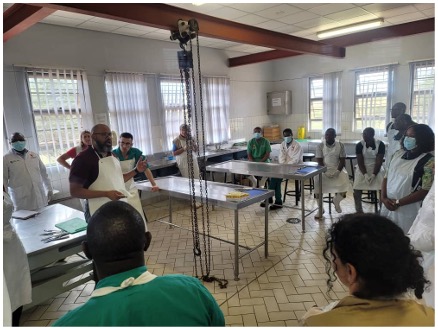
Unlike conference‑style preparation courses built for established pathology training programs in pursuit of board certification in the American College of Veterinary Pathologists (ACVP) or European College of Veterinary Pathologists (ECVP), the GHPN runs intensive 3-4-day workshops using adult learning principles tailored specifically to the region of interest and in settings with minimal resources and equipment. This includes places where veterinarians often must fill diagnostic roles without in‑country pathology specialists. According to Dr. Corner, the workshops emphasize a wide variety of topics based on local needs, such as the pathogenesis of regionally important diseases in food animals, field postmortem examinations (i.e., necropsies), animal‑side testing, basic mechanisms of disease and correct sample handling. Workshops on wildlife and companion animal diseases have also been held.
“We train based on regional need,” says Dr. Corner. “We have a basic framework for our training workshops, which tend to be about three days long, and they're very hands-on. We do very minimal lecturing…we teach based on regional diseases of interest and importance in their food animal systems.”
The GHPN additionally adapts sessions when institutions ask for specialty topics, such as clinical pathology. Dr. Corner explains that veterinary pathology is divided into board‑certified anatomic and clinical pathology specialties, and GHPN recruits clinical pathologists when topics such as bloodwork analysis and animal-side testing, such as fluid cytology and aspirate collection, are requested.
Sustaining Global Relationships
As part of their efforts to encourage growth in global pathology networks, the GHPN is nurturing and sustaining its international partnerships to ensure local practices benefit long-term from their training.
“We try to develop sustained relationships with the host universities and veterinary professionals in that region,” says Dr. Corner. “We don't think it's very successful to just go in and give a three‑day workshop without any follow-up.”
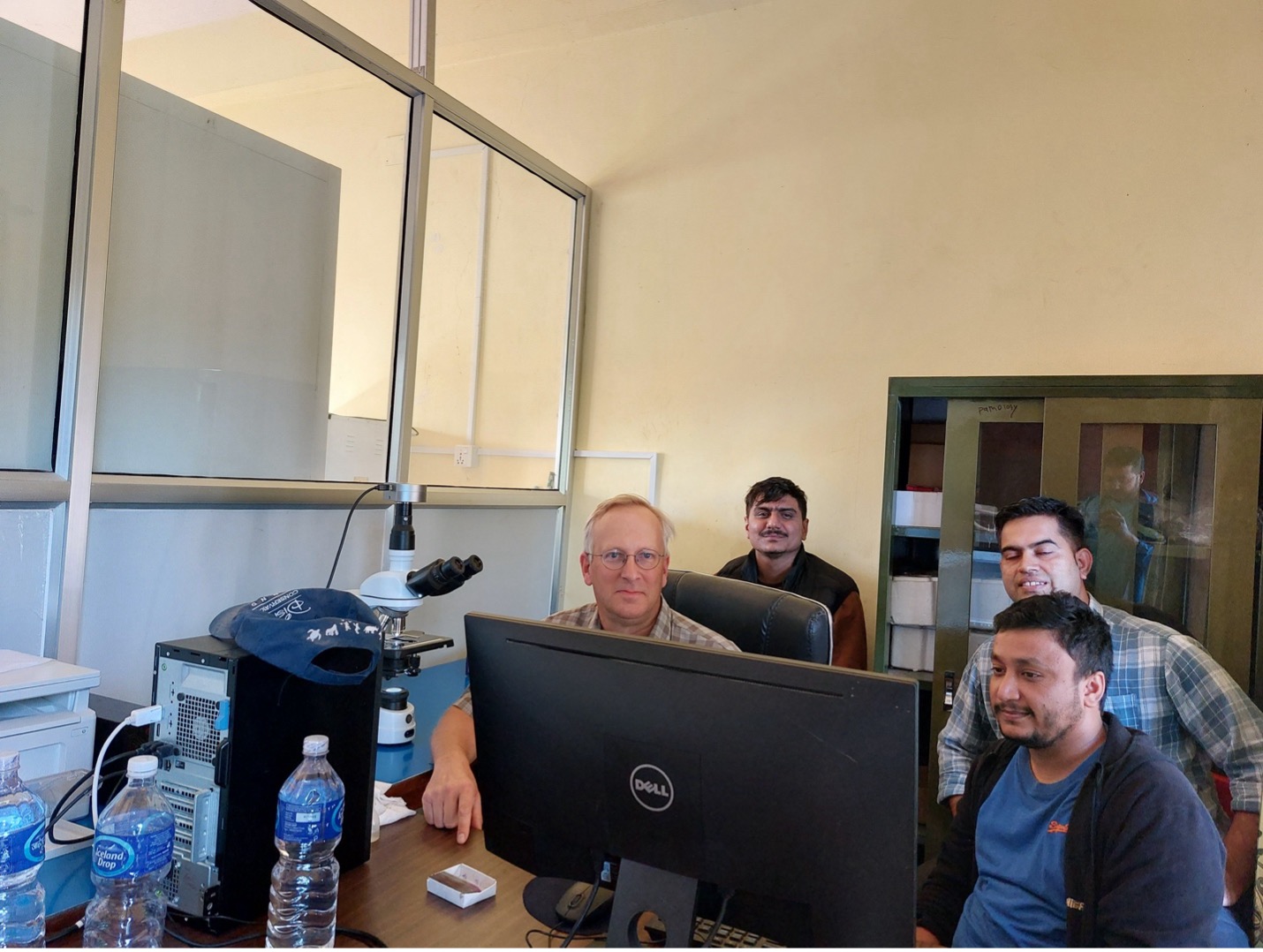
The network has built strong ties with the University of Veterinary and Animal Sciences in Lahore, Pakistan, where teams have led near‑annual workshops for several years. Additional trainings have taken place in East Africa (Rwanda and Uganda), West Africa (Ghana), South Africa (Namibia), North Africa (Algeria), South and Southeast Asia (Nepal, Bangladesh, the Philippines, and Indonesia) and Central America (Guatemala and Nicaragua). The group typically conducts six or seven in‑country workshops annually and supplements them with monthly virtual “telepathology” meetings to share slides and maintain relationships between visits. Recent GHPN telepathology efforts have been funded by a 2022 award from the American Association of Veterinary Medical Colleges (AAVMC) Council on Veterinary Medical Education (CIVME) Educational Exchange Grant, which helped fund the purchase and delivery of equipment such as microscopes and cameras to Indonesia, Ghana and Pakistan.
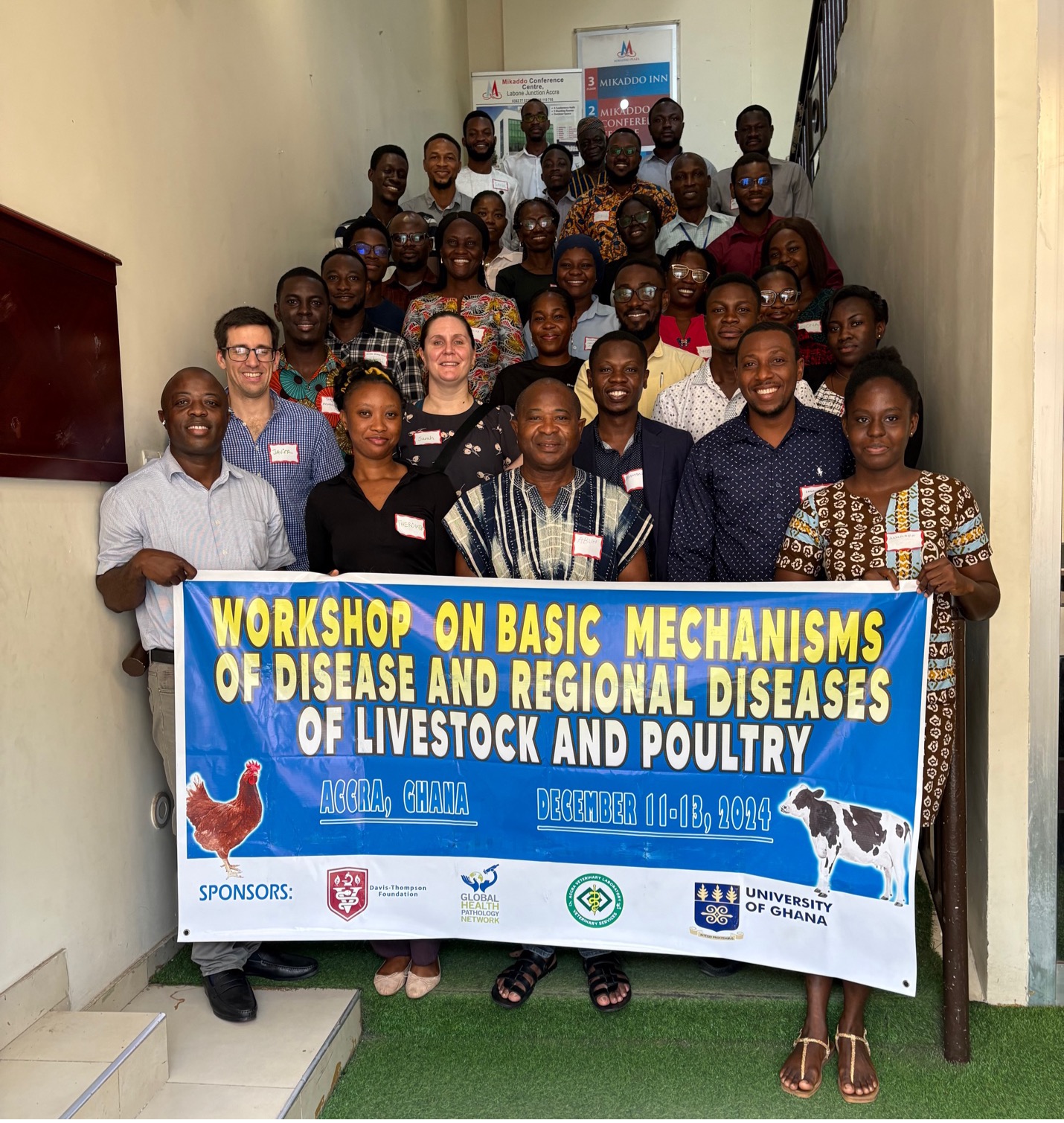
The volunteer core includes eight members, with roughly 10 additional pathologists from North America, contributing to workshop delivery. Workshops are held collaboratively with the host university. Each host site adds one to two local facilitators who help organize and teach the workshops. Workshop participants are also actively engaged in teaching each other and the facilitators about pathology concepts, especially when diseases common in the region are absent in the United States.
“The learning definitely goes both ways,” says Dr. Corner. “Some diseases that we label as ‘foreign animal diseases’ here in the US are endemic in these locations, and we learn a lot from veterinarians having to manage these diseases.” Altogether, Dr. Corner estimates 40-50 veterinary professionals worldwide have helped maintain and lead sessions.
More Access, More Reporting
A primary goal of the GHPN is to make veterinary pathology more accessible to frontline veterinarians, to enable faster recognition and better decision-making in the field to strengthen early and sustained disease reporting systems that safeguard national and global food supplies.
“We want to make veterinary pathology more accessible to veterinarians who have to fill that role in their home institution or out in the field,” says Dr. Corner, adding that better recognition and reporting of diseases that impact food animals, including transboundary and zoonotic diseases, is central to the mission. For example, training can include how to identify lesions and herd‑level signs consistent with foot‑and‑mouth disease, a transboundary threat with enormous economic consequences if undetected or under‑reported. The emphasis on detection and sample handling is meant to support earlier alerts, more reliable lab submissions and improved collaboration with health authorities.
Continuing Strides in Global Health
In the future, GHPN plans to deepen existing partnerships by expanding telepathology support and more rigorously tracking training outcomes, improving sample quality and streamlining reporting of priority diseases. Dr. Corner emphasizes that the network wants to understand how participants apply their training and whether it measurably strengthens veterinary disease surveillance and impacts veterinary education at the university level.
“We want to track outcomes better, and continued transparent collaboration with host universities and ministries is key.”