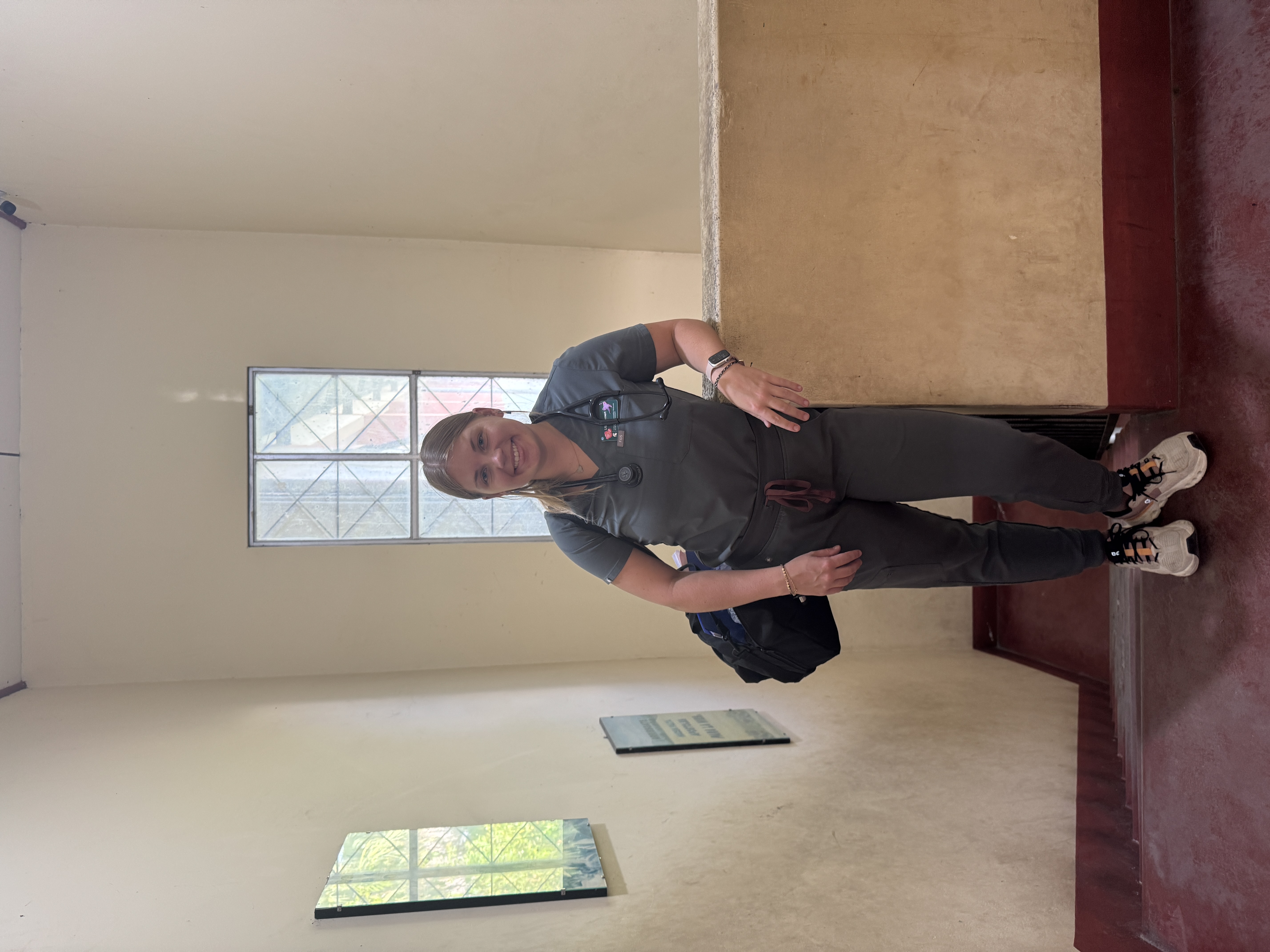
Long before her time as a medical student, Lilja Plumert knew her future career would be in healthcare.
A student from Grand Haven, MI, Plumert began exploring her interest in medicine by joining her high school’s OsteoScholars program, which introduces students to osteopathic medicine and its principles. As part of the program, Plumert’s high school partnered with Michigan State University for a week-long program called OsteoCHAMPS. This initial exposure to this program opened a door for Plumert to explore her passions and join the Osteopathic Medical Scholars Program, which is led by the MSU College of Osteopathic Medicine (MSUCOM) as an introductory program for undergraduate students.
“I think that health is very important,” says Plumert, “and I want people to be working and doing their best to continue to make their lives what they want them to be.”
Early Inspiration
Plumert enrolled at MSU as an undergraduate, where she was introduced to the education abroad opportunities provided by MSU’s Global Health Studies Program. In August 2023, she attended the pre-clinical observation trip to Merida, Mexico, learning alongside MSUCOM medical students and assisting with taking vitals and triaging patients.
“My job [in Merida] was I would take vitals, and I would help with the triage process to help figure out which patients would need to be seen first,” said Plumert. “We then went and toured a larger hospital that did a lot of surgeries. They had a dialysis center, and so as an undergraduate… I was able to observe surgeries and how that procedure was done.”
After returning from her trip to Mexico, Plumert knew that she wanted to participate in another global health experience and vowed to participate in another education abroad program. When she became a medical student, she remembered the advice she received from the medical students in Mexico as an undergraduate.
“I heard from the second-year students who were on the [Mexico] trip with me that there were other opportunities, including the Peru trip,” said Plumert. “So, when I got into the College of Osteopathic Medicine, I knew for a fact I was like, I want to go to Peru and be heavily involved in this program.”
Immersion in the Amazon
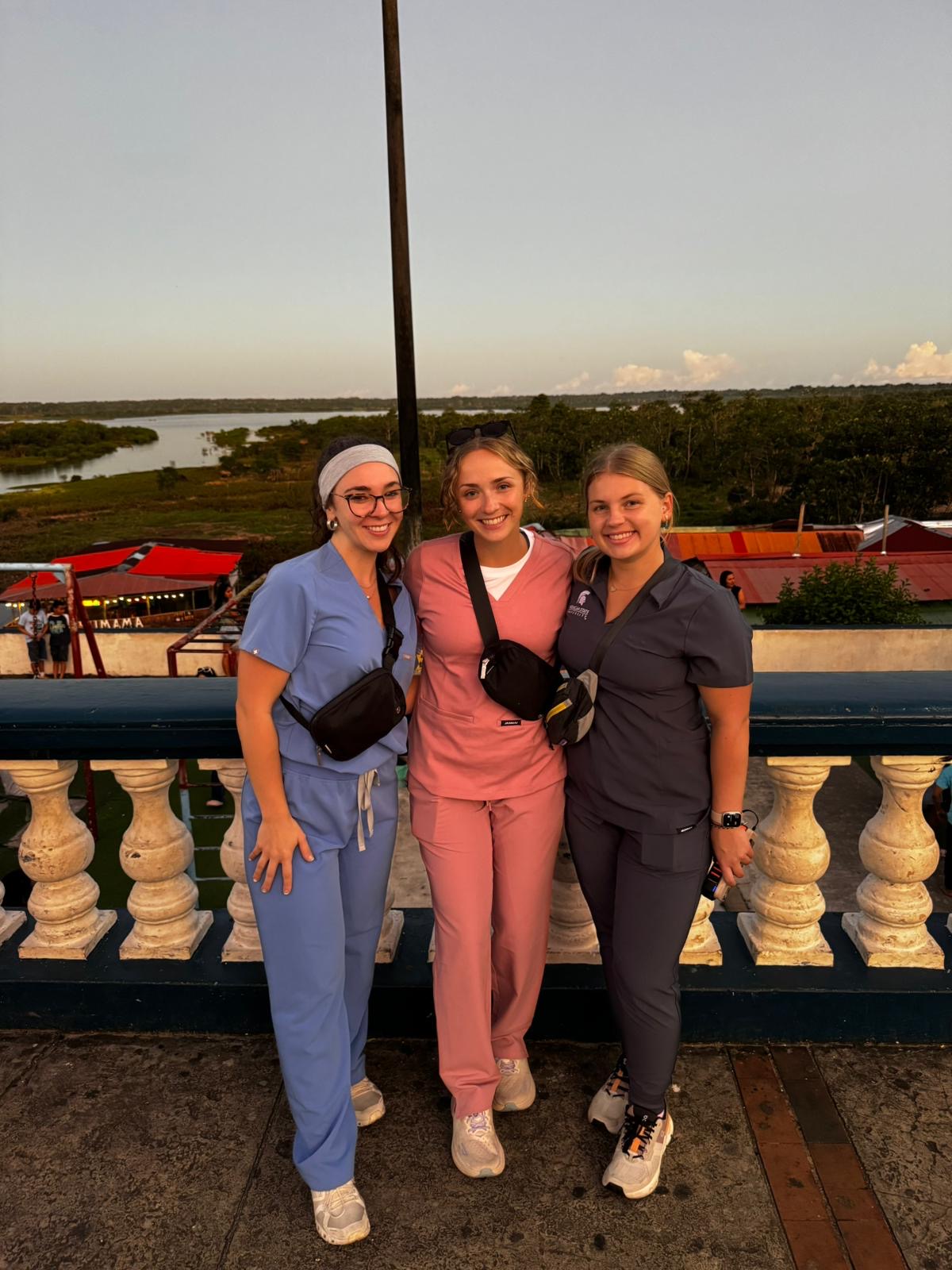
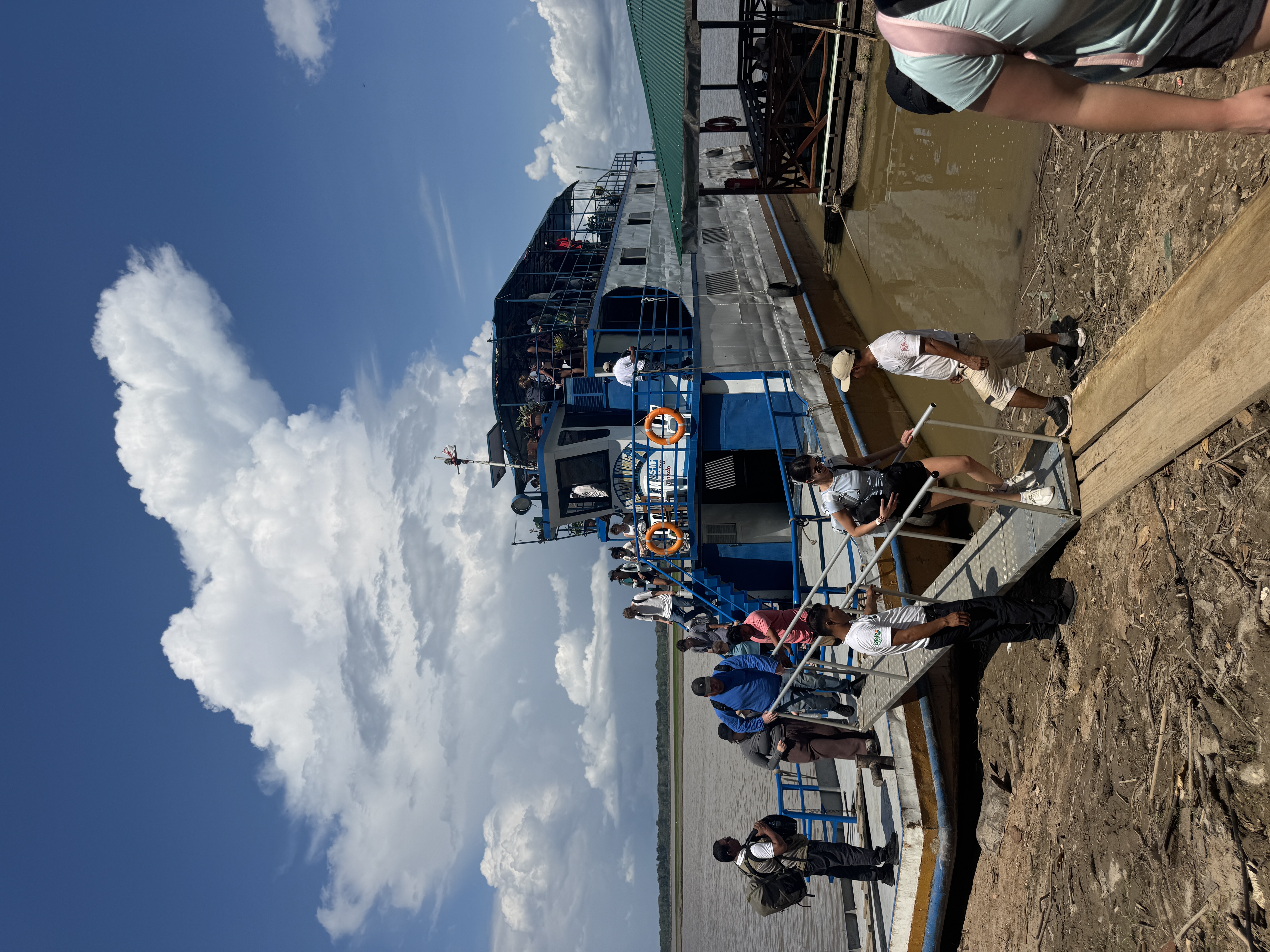
The Peru pre-clinical observation and clinical immersion programs are some of the most popular education abroad programs Global Health Studies offers. The extended time to learn from local practitioners and treat patients in isolated areas, including villages near the Amazon River, makes it a popular option for medical students looking to increase their field experience in settings with limited medical resources.
“I thought it would be very eye-opening to travel on a boat in the Amazon and go to these different communities and see the hardships that [residents] face being so geographically isolated from other healthcare clinics,” said Plumert.
The education abroad experiences in Peru are annual ventures, allowing Global Health Institute faculty and participating students to establish lasting relationships with patients. Something that Plumert noticed immediately when she visited a clinic in Iquitos during the trip.
“Dr. [Jodi] Flanders has such an established relationship with the clinic in Iquitos, and I think that was really interesting and rewarding to see,” says Plumert. “She takes the students back every year, and there’s this longevity of seeing these patients over and over again, so you can follow their progress.”
Those relationships, combined with the earned trust of the community to assist with their health needs, were one of the most impactful memories Plumert has from her trip.
“The fact that each day we would roll up to the clinic and there would be a line of… over 100 people… waiting for us to get there and see them. That meant a lot to me because we are outsiders going there. It’s their community, it’s their home, and they’re welcoming us.”
Learning through Cultural Humility
The feelings of being an outsider in different healthcare environments later inspired Plumert to co-author a presentation about her experiences in Peru at MSU’s Global Learning Conference, which took place in November of last year.
“That presentation was actually between my friend and I,” Plumert said. “We both went on two different study abroad opportunities together. One of them was to Paris… where we learned about the history of medicine and comparative healthcare between France and the United States. Then we also went to Peru together.”
In their presentation, Plumert and her friend, fellow MSUCOM student Maddy Moreno, discussed not only how healthcare methods can differ between nations, but also how having a greater understanding of patient perspectives can have an impact on their healthcare delivery. One patient in particular, whom Plumert remembers, was seen during her visit to the clinic in Iquitos, where a mother brought in her young child to treat a cleft lip and palate. Plumert notes that while they, as students, did not have enough experience to directly treat the issue, the mother explained that there weren’t many opportunities to receive check-ups and treatment.
“She told us that they do have some sort of clinics that come into [Iquitos] every once in a while that specialize in cleft lip and palate repair,” Plumert said. “And basically… they’re just waiting. They don’t know when this clinic is going to come into town to help them.”
A Broader Perspective on Global Health
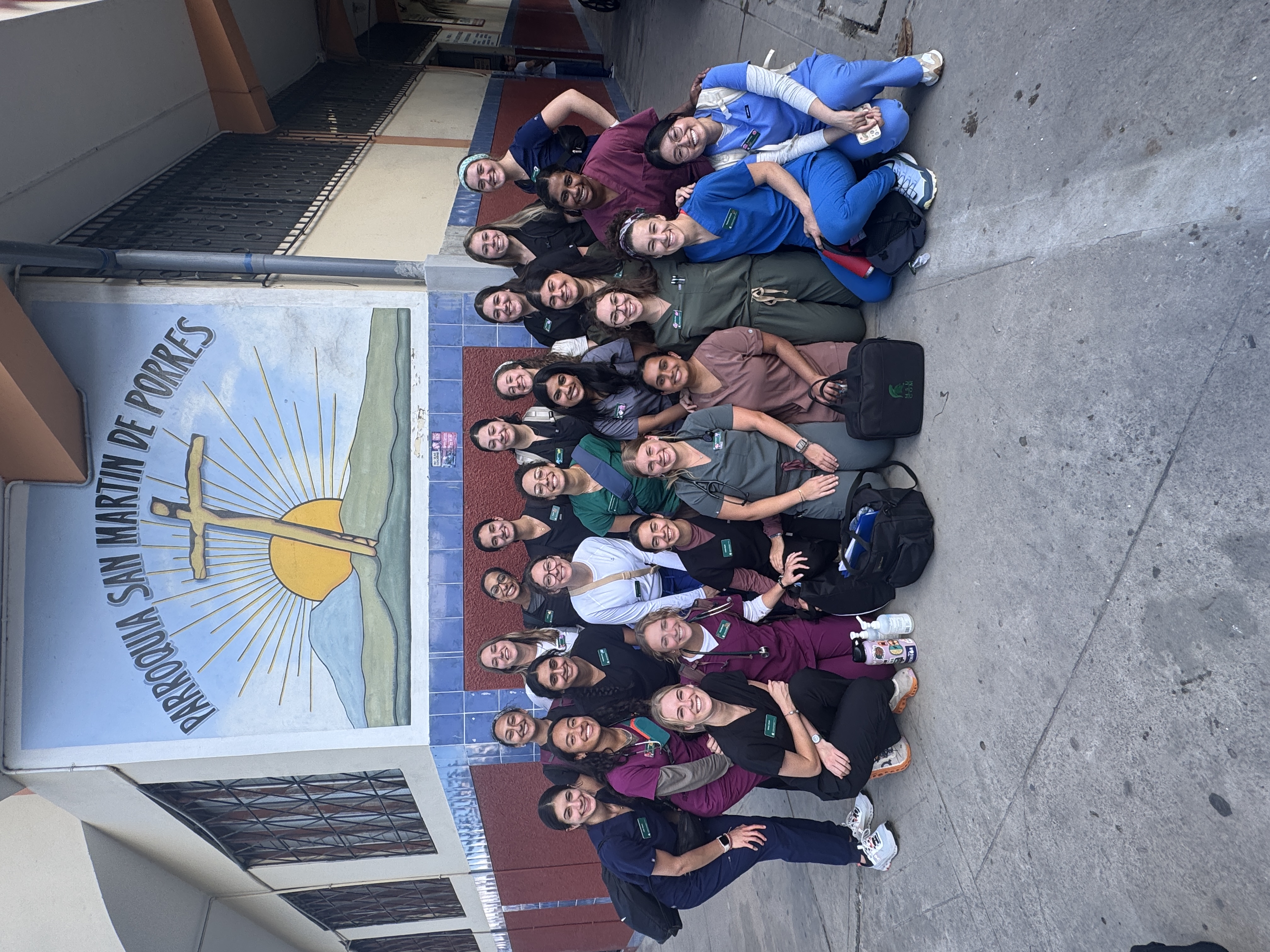
One of Plumert’s major takeaways from the Peru program was a greater understanding of the difference in healthcare access around the world and the barriers that can be faced to receive healthcare in geographically isolated areas. After experiencing those potential barriers firsthand, Plumert encourages medical students to experience education abroad programs themselves so they can gain a better perspective of how healthcare is managed around the world.
“Just put yourself out there to get that cultural humility, to be able to understand that not all situations are the same as in the United States for healthcare,” says Plumert. “Put yourself in that position because there’s no way you will not benefit from it and the people you meet… You can never learn too much.”