It’s Thursday, Feb. 26, 2026. In a College of Natural Sciences lecture hall at Makerere University (MAK) in Kampala, Uganda, Dr. Bartolomeo Gorgoglione is starting the first of a series of lectures planned for the workshop “One Health in Aquaculture.” Gorgoglione, an assistant professor and researcher on fish pathobiology and immunology at Michigan State University (MSU), is becoming a leading voice in the field. His work in aquatic veterinary education and research on fish immunology relevant to aquaculture practices and wildlife management have earned him international recognition. The aim of his visit to Uganda was to explore new opportunities for research partnerships after delivering professional training, together with other local and international lecturers, about fish health, and how aquaculture can become a developing force in local communities.
.jpg)
An International Training Background
Educated in Italy (Specialistic Degree in Veterinary Medicine in Bari) and Scotland (Master’s in Stirling, followed by a Doctorate (Ph.D.) in Aberdeen), Dr. Gorgoglione’s academic journey came from both personal and professional goals.
“I certainly like travelling,” says Gorgoglione. “I do enjoy experiencing different cultures… but when for work, it’s important to explore and go where there may be suitable training and quality work opportunities.”
While learning about fish immunology, Gorgoglione mentions that the more he realized how niche his interests were, the more opportunities might be available if he continued down that path.
“A very, very small portion of veterinarians works with exotic animals, such as birds, reptiles, and fish… It’s not going to come as easy path like when you’re working in a regular clinic with cats and dogs… but at the same time, you may become an expert in this field and there are very few veterinarians with such expertise in the world. So, people will start looking for you and doors may open.”
Those doors began to open immediately after Gorgoglione earned his Ph.D. in biology in 2014, completing an ambitious research project in fish immunology focused on polymicrobial infections in trout at the University of Aberdeen. His first postgraduate job was a faculty position at VetMedUni in Vienna, Austria. He later moved to the United States, obtaining a postdoctoral position created specifically for him in a fish virology lab in Ohio. In 2019, he started the Fish Pathobiology and Immunology Laboratory at MSU, after being selected for a highly competitive tenure-track faculty position jointly between the Department of Pathobiology and Diagnostic Investigation (PDI) at the College of Veterinary Medicine (CVM) and the Department of Fisheries and Wildlife (FW) at the College of Agriculture and Natural Resources (CANR).
Expanding Efforts in Fish Health Awareness
Gorgoglione’s work is not limited to teaching aquatic animal medicine. His research in fish-borne pathogens has led to efforts in tracking emerging pathogens at home and abroad. Recently, he discovered the presence of an emerging myxozoan parasite, Tetracapsuloides bryosalmonae, new in the Great Lakes basin, which causes proliferative kidney disease (PKD) in trout and other salmonid fish species across Europe and Northwestern America.
“This myxozoan parasite is not yet seen killing any fish in Michigan… but the imminent problem is due to regulations limiting aquaculture activities, so fish farmers would be impacted unless this pathogen is moved into a more adequate category,” says Gorgoglione. “If this pathogen is detected, they must change their production tactics. In recent years, the presence of another myxozoan parasite (Myxobolus cerebralis, causing whirling disease) has already sent out of business many fish farms in Michigan. My lab is working to avoid a similar situation happens again, by demonstrating that T. bryosalmonae is already naturally occurring in Michigan and surrounding waters.”
Gorgoglione’s group is also investigating emerging viral infections among the highly invasive Asian carp species that may disrupt the Great Lakes ecosystems as they continue spreading through waterways in the Midwest.
“Once they might enter the Great Lakes watershed, government agencies won’t be able to eradicate them,” says Gorgoglione. “Our study, mainly involving a CMIB Ph.D. student Santosh Lamichhane, is determining the presence of potentially emerging viruses in the area both in invasive Asian carps and native fish populations to see if they may be carriers and contribute to spread-out pathogens to potentially highly susceptible native fish populations that could be affected by these viruses.”
The Worldwide Need for Seafood from Aquaculture
Dr. Gorgoglione’s research focuses on parasitology and virology, studying emerging pathogens and host-pathogen interactions in wild fish populations and in aquaculture. This work is increasingly relevant as aquaculture (the controlled breeding, rearing and harvesting of fish and plants in freshwater or marine environments) grows in global demand and value.
“Worldwide there’s a lot of need for aquatic veterinarians, biologists and those who work with fish farming and their health management because aquaculture is booming in many countries,” says Gorgoglione. “People need animal proteins, but traditional agricultural practices cannot sustain any longer the current large world population. There’s a need for a sustainable way to produce and diversify animal proteins, so aquaculture is becoming an answer.”
Through their One Health impact, Gorgoglione emphasizes that aquaculture and fish health practices can not only create new global partnerships but also increase opportunities for food security around the world.
“I think it’s important to consider this specialty, working in fish health, because through it we can establish good partnerships with other countries where aquaculture is becoming really important and try to rely on it as a modern sustainable source of healthy proteins.”
Through his international trips and lectures, Gorgoglione sees how his work impacts environmental and human health from a One Health perspective, ensuring that both the quantity and quality of fish contribute to healthy food options for residents, support local economies and improve environmentally sustainable food-gathering practices.
Furthermore, aquaculture may provide opportunities for new employment, often suitable for young people and women, and increases the ability to produce food locally rather than rely heavily on imports. This connects back to Gorgoglione’s exploratory work in Africa.
One Health from an Aquaculture Perspective
Dr. Gorgoglione’s workshop was sponsored by Faculty Global Engagement Fund awarded by the Alliance for African Partnership and supported by the World Veterinary Education in Production Animal Health (WVEPAH). He organized the workshop with Dr. Rosemary Nalwanga from the College of Animal Science (CoNAS) at MAK, bringing together local veterinarians and extension workers, students and fish farmers for two days.
Thanks to the support from local and international guest lecturers, the workshop covered topics such as the relevance of biosecurity in fish farms (by Mr. Abdul Noor Luttamaguzi from a Ugandan Government agency), local regulations (by Dr. Peter Akoll, MAK) and sampling techniques (by Dr. Kizito Kahoza Mugimba, MAK)
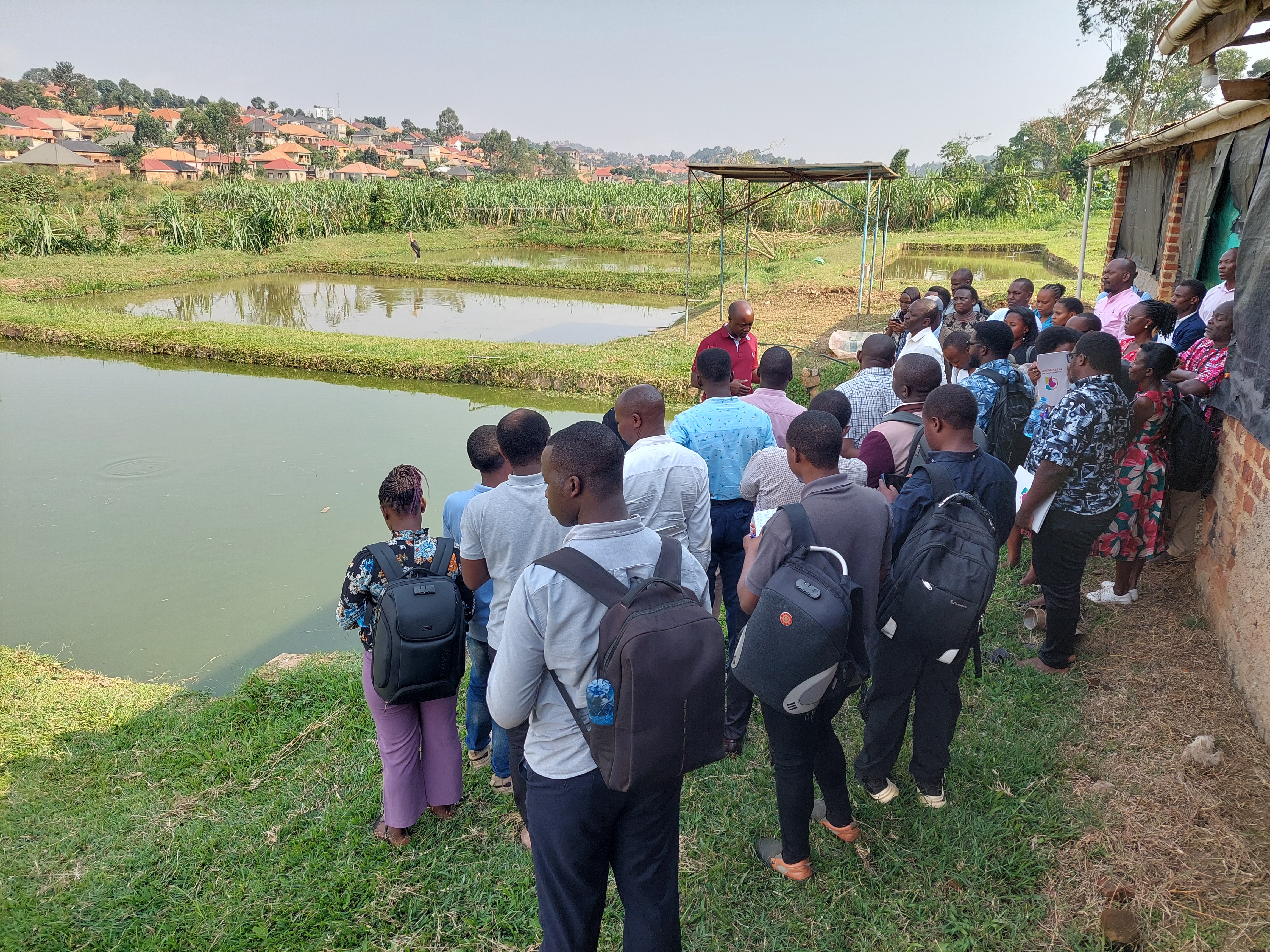
To complete these trainings, Gorgoglione and workshop participants visited a local African catfish farm.
“Walking through the fishponds and in the hatchery facility, we learned how aquaculture may become a remunerative and sustainable work for small farmers, and discussed biosecurity implementation efforts,” Gorgoglione said.
At MAK, the dinner was supplemented by a keynote lecture on mycotoxins and contaminants in aquaculture and seafood sectors delivered by Dr. Evalyn Mwihia Wanjiru from Egerton University in Kenya. Her fascinating lecture highlighted how agricultural practices can create challenges in fish farming and for seafood consumers.
On the second day of the workshop, Dr. Gorgoglione gave another lecture on fish health and disease management in aquaculture, while Dr. Nelly Isyagi from AU-IBAR, Kenya raised awareness on antimicrobial resistance concerns, both in fish and in their consumers. Dr. Akele Koulou Joël Quentin, a veterinarian working for Aller Aqua, Denmark who travelled from Cameroon, trained workshop participants on how fish nutrition may promote sustainable aquaculture.
Dr. Nalwanga moderated a debate, collecting questions and feedback from participants.
“We tried to address questions about issues that fish farmers are facing,” Gorgoglione said. “How are they connected to fish health? What are the issues involved with fish feeding, which represent the biggest cost in aquaculture. How their efforts can improve local aquaculture practices and expand job opportunities.”
Visiting Stakeholders and Giving Lectures in Uganda
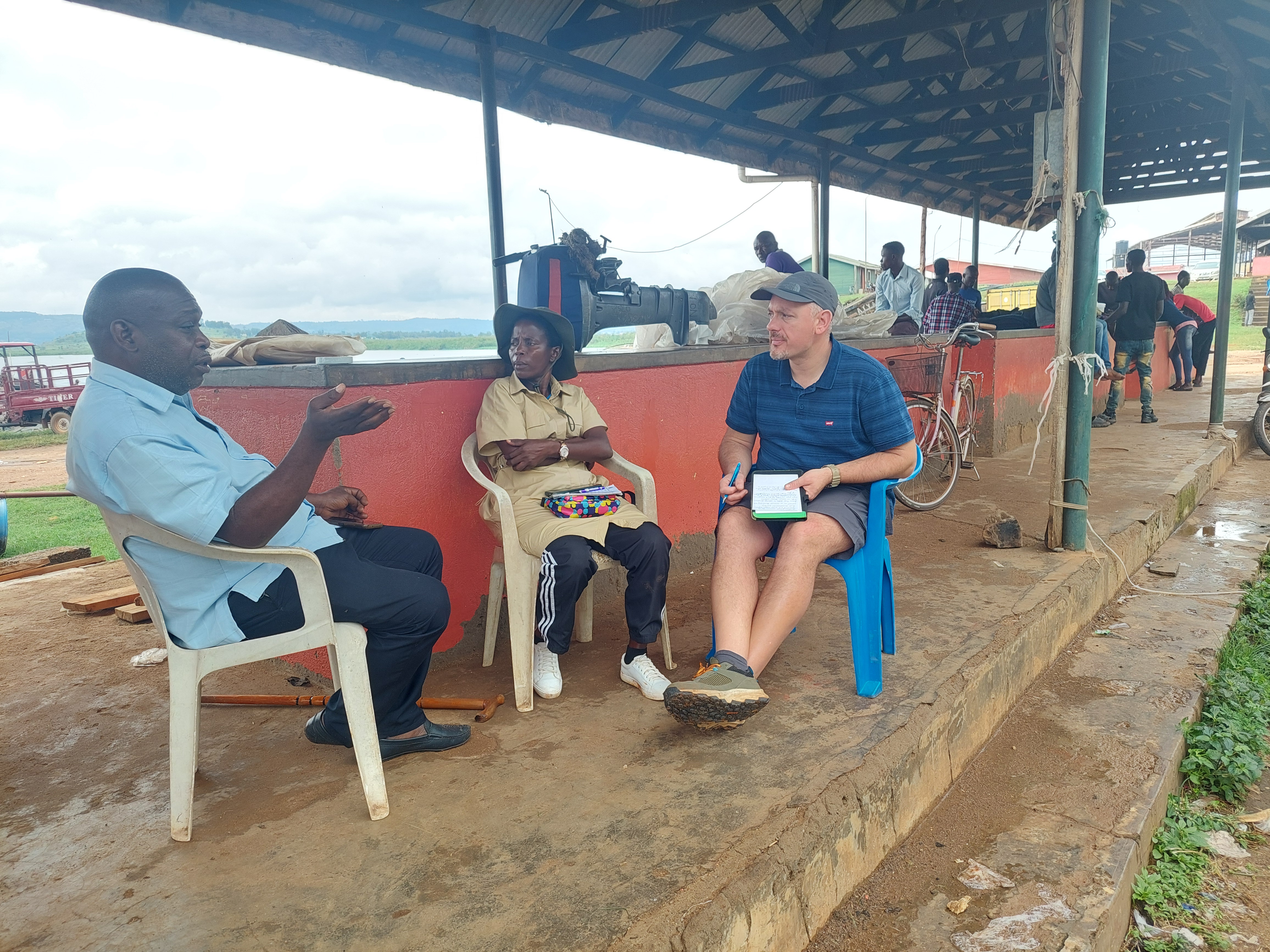
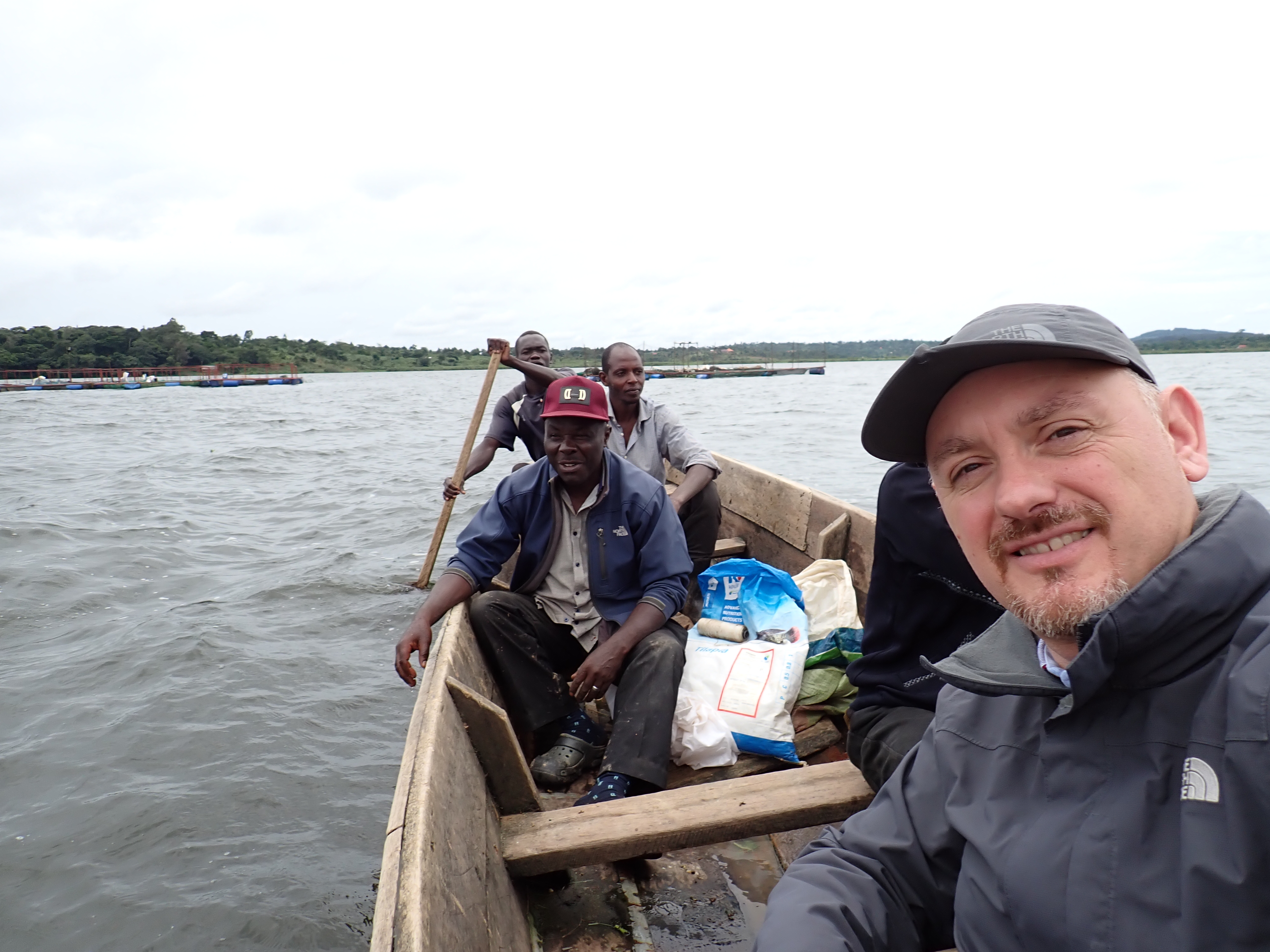
While in Uganda, Gorgoglione and Nalwanga travelled together to visit several fish farms. They spoke directly with local fish farmers and businessmen involved in implementing industrial aquaculture with African catfish and Nile tilapia.
"It was great to meet with the founder of the Masese Cage Fish Farmers Cooperative in Jinja, the famous location where the Nile River born from Lake Victoria. They are a great example of how aquaculture can change people’s lives. The cooperative guarantees jobs to guys that otherwise might have been doing dangerous or dirty works, and since they started their business is constantly growing and adding more farmers.”
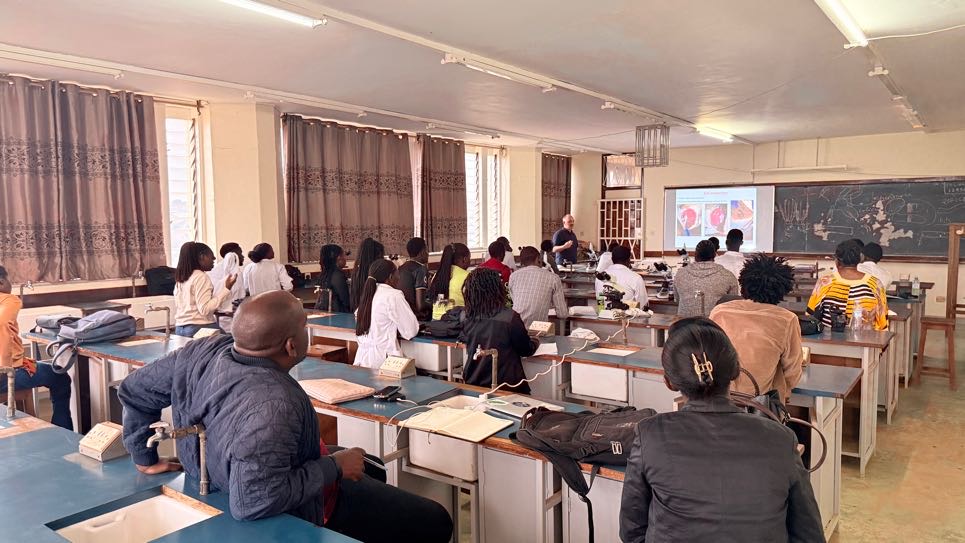
During his MAK visit, Gorgoglione also delivered guest lectures to both the CoNAS and COVAB departments.
"I told students that the good news is there are a lot of job opportunities for you,” says Gorgoglione. “So, if you want to start to specialize, there are multiple paths. It’s not just diagnostic work, it can also be studying the social aspects of aquaculture, fish health management, there are so many fields connected to aquaculture you can work in.”
On the final day of his visit, nearly on his way to Entebbe airport, Gorgoglione presented to local faculty an overview of his innovative teaching approaches at MSU. He explained how he redesigned the aquatic animal medicine clerkship (PDI 636), including how the last three editions incorporated training in partnership with the University of Pretoria in South Africa. Faculty and student exchange possibilities with MSU were also discussed, even by fostering MAK student attendance at the course taught by Gorgoglione at MSU.

“MSU has been collaborating with Makerere University for many years in other agricultural and veterinary fields, but nothing really related to fish health in aquaculture was done before,” he says. “The goal for assisting MAK faculty and students is for establishing new research projects that focus on health management practices in aquaculture.”